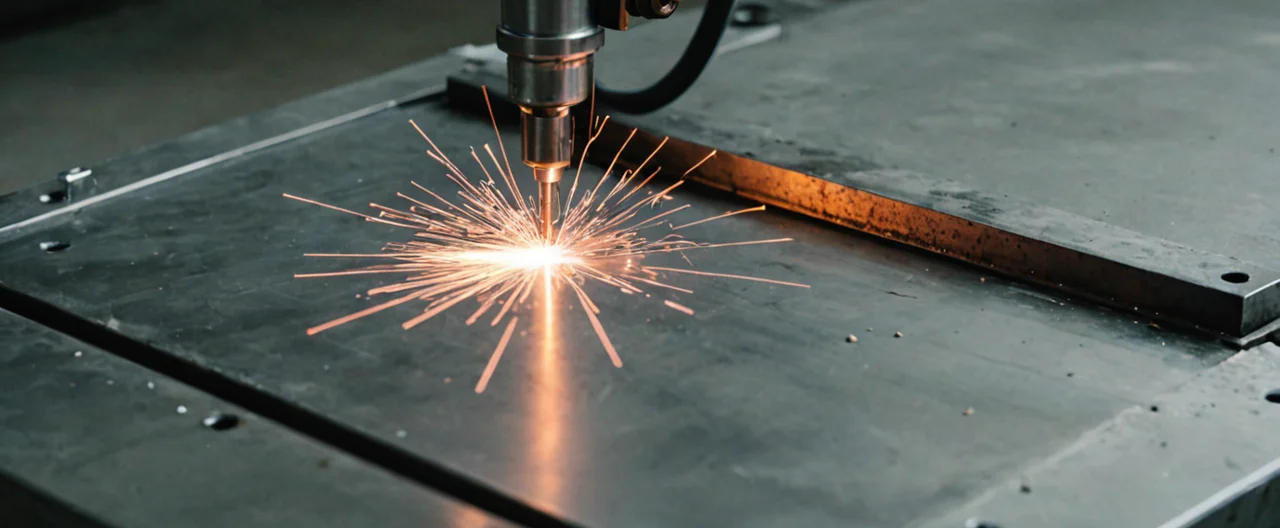
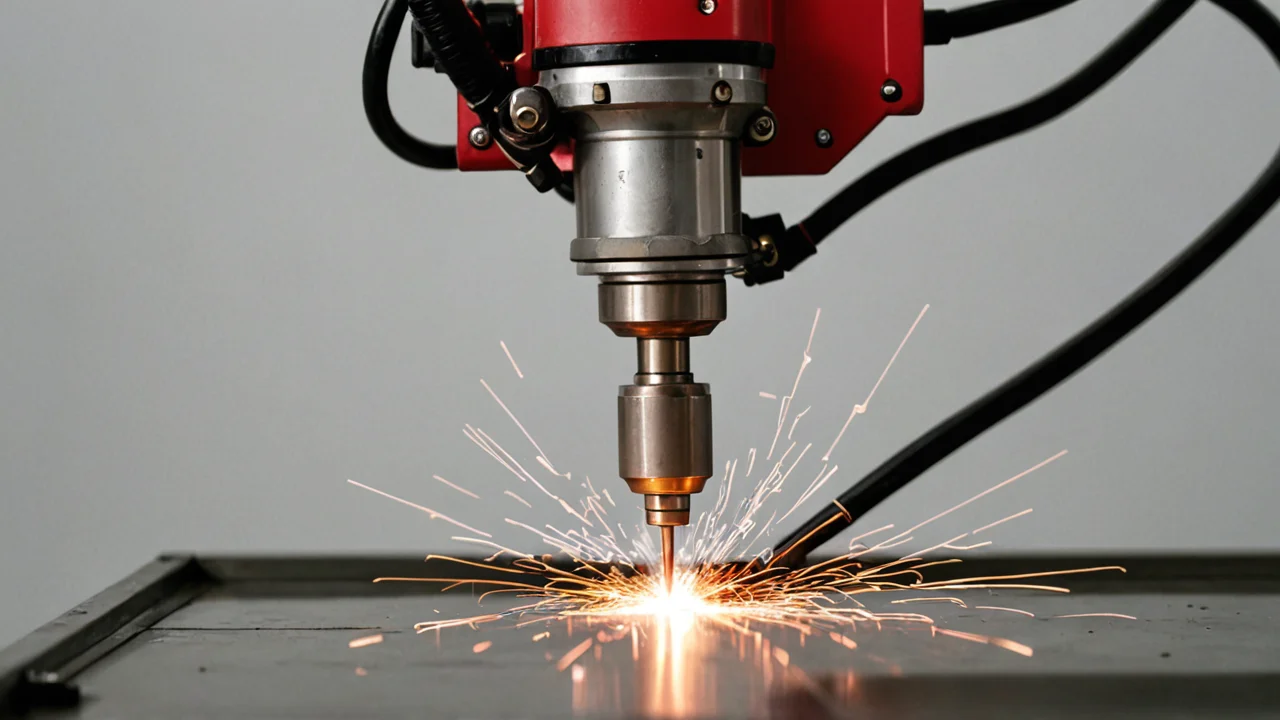
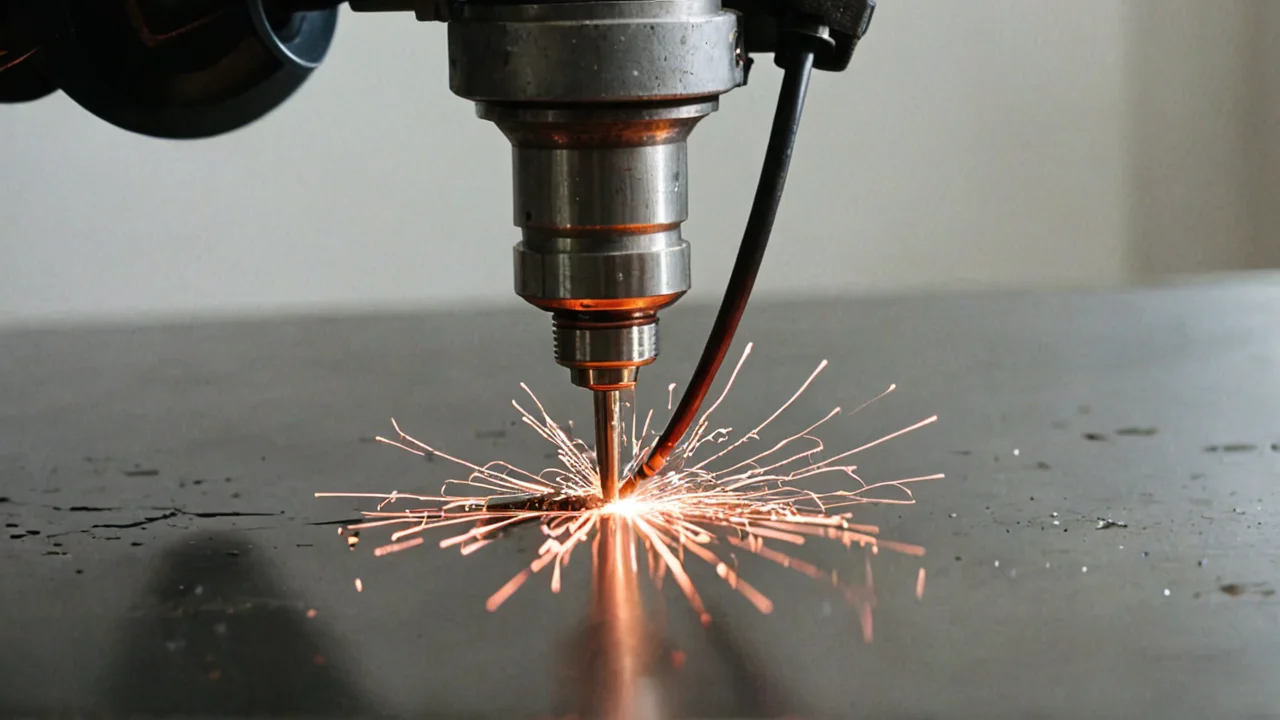
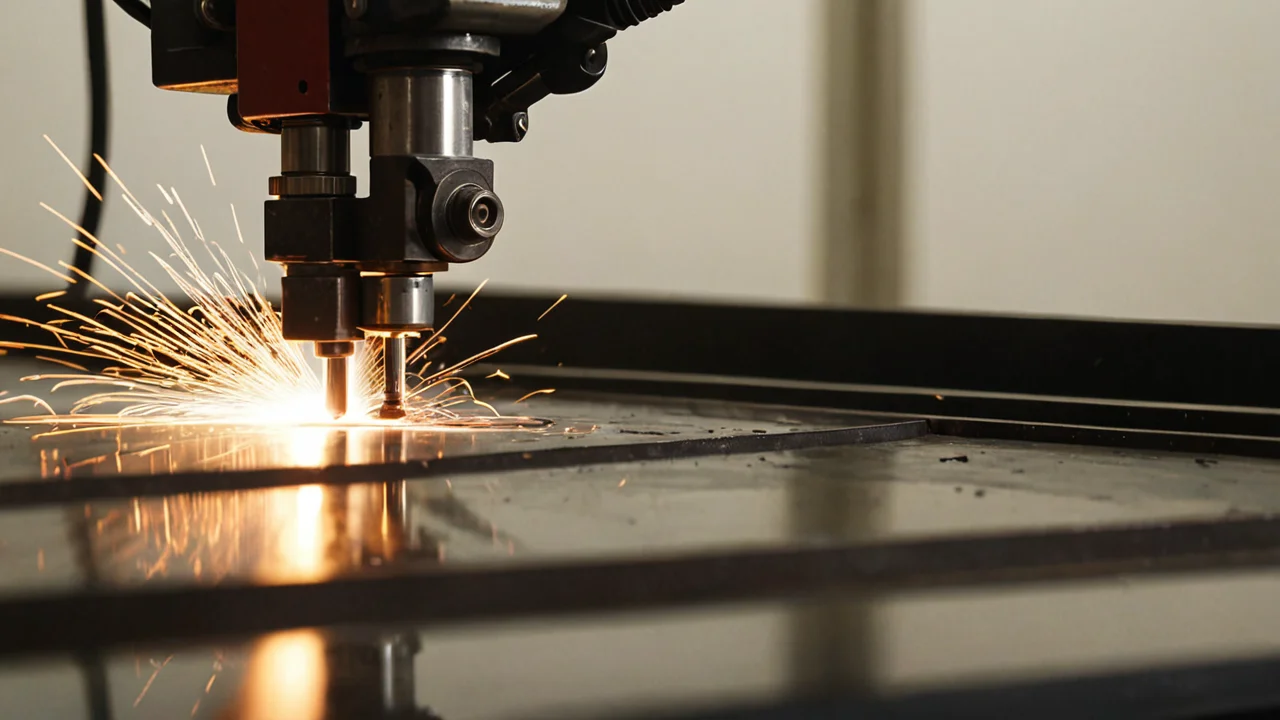
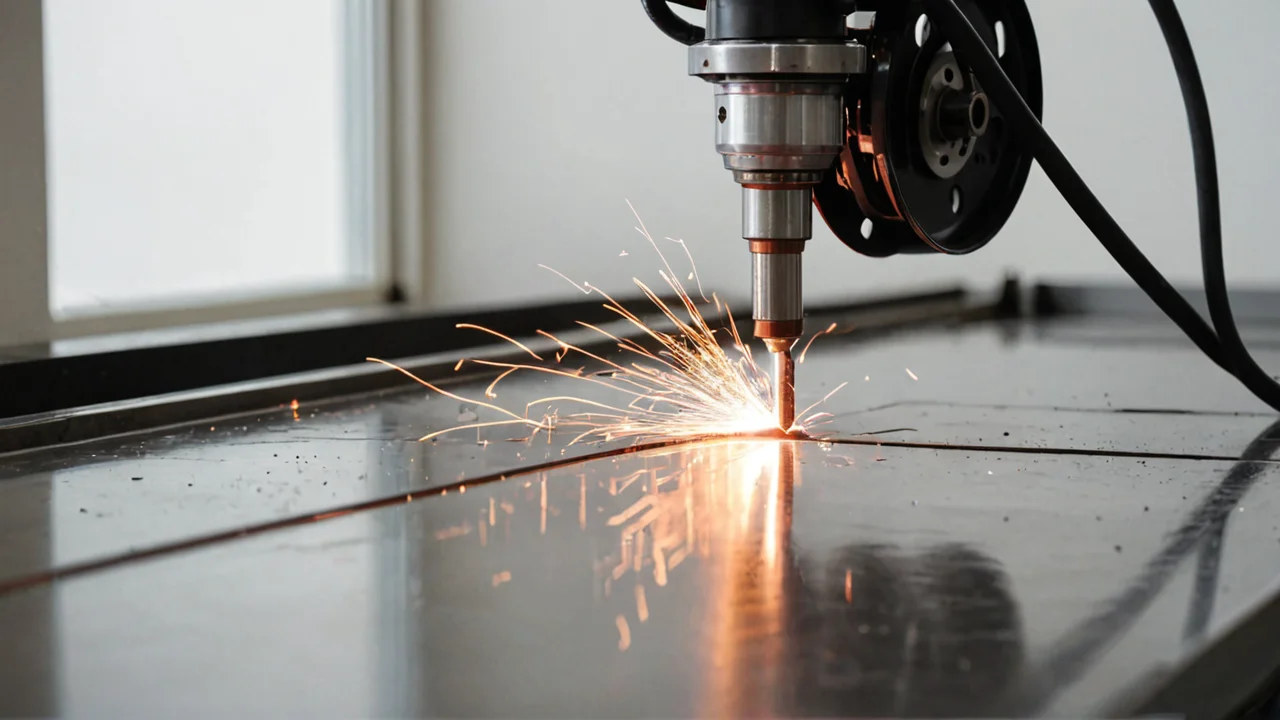
Plasma is the fourth state of matter, and the practical version of it in a weld shop is a column of gas heated until it conducts electricity — an arc squeezed through a small orifice so it comes out hot, fast, and narrow enough to cut or fuse metal in a controlled line. Every machine on the market, from a $200 hobby cutter to a six-figure automated TIG cell, is doing the same three things: striking an arc, feeding gas to keep that arc stable, and controlling how much energy reaches the work. Everything that follows is about those three jobs and the choices they force on you.
How a plasma arc actually gets struck and held
You need roughly 200–400 volts DC to start and maintain a plasma cutting arc, and that number is the single biggest reason plasma cutters are not simple boxes. Mains power in a shop doesn't arrive at that voltage, so the machine's internal inverter has to step it up, and the pilot arc circuit has to ionize a path through the gas before the main transfer arc can establish. That is what the high-frequency start is for: a burst of voltage jumps the gap, the gas becomes conductive, and the cutting arc takes over from there.
On the welding side the same physics shows up in a different shape. TIG — Gas Tungsten Arc Welding, or GTAW — uses a nonconsumable tungsten electrode and an inert shielding gas, typically argon, to protect the molten weld pool from atmospheric contamination, and it is the process of choice for precise, high-quality welds on steel, stainless steel, and aluminum. Nothing about TIG involves a constricted orifice, which is why a TIG arc is broad and soft compared with a plasma jet, and why TIG is a finesse process while plasma cutting is an energy-delivery process. The arc is struck the same way in principle — ionize the gap, then maintain it — but the voltages, currents and gas behavior are different enough that the two are separate disciplines.
The start method on TIG is a decision you make and live with. Lift TIG welding touches the tungsten briefly to the workpiece at low open-circuit voltage and then lifts it to initiate the arc, which reduces the risk of high-frequency electromagnetic interference with nearby electronics. High-frequency start jumps the arc without contact. Lift start is the safer choice around sensitive controls, CNC equipment, or anything with an unshielded signal cable running near the table; it costs you a fraction of a second per start and a little tungsten contamination each time you touch down. HF start is faster and cleaner at the tungsten, but if you are welding next to a machine that misbehaves when the arc strikes, you will find out quickly and you will want lift start.
What goes wrong: a cutter that trips its pilot arc but won't transfer usually means the work lead isn't clamped to clean metal, or the consumables are worn past the point where the orifice still constricts the gas. A TIG torch that strikes and then wanders usually means the tungsten is contaminated or the gas isn't arriving yet — the arc is fine, the shield is not.
Gas flow: the number that fixes most bad welds
For TIG with argon, the typical shielding gas flow rate range is 10–35 cubic feet per hour (cfh). If you are running an LNT 25 power source, the recommended argon flow rate is narrower: 10–15 liters per minute (L/min). Note the units — cfh and L/min are not the same scale, and mixing them up is one of the most common ways people convince themselves their machine is broken when it isn't. Read the regulator in the units your machine's documentation uses and leave it there.
Inside that range, the setting is not a matter of taste. Too little flow and you don't get a protective envelope; the pool sees oxygen, nitrogen and water vapor from the air, and you get porosity and weld defects that show up either immediately as a dirty, gray bead or later as a failed inspection. Too much flow and the gas leaves the cup at enough velocity to pull room air in with it — turbulence entrains atmosphere, so overdoing the flow produces the same contamination you were trying to prevent, plus a hissing cup and a wandering arc. The window between those two failures is why the range exists.
Pure argon is the default for a reason: it is a noble gas supplied as high-purity welding-grade argon (around 99.99% or higher), which gives stable arc characteristics and minimizes contamination of the weld. Argon-helium mixtures come into play when you need more heat input into a thick or highly conductive part, but helium costs more and changes the arc's character, so it is a deliberate step rather than a default. If your shop does mostly thin stainless and steel, straight argon covers nearly everything.
The trade-off nobody likes: gas is a consumable with a recurring bill, and a slight leak anywhere between the regulator and the cup — a cracked hose, a loose fitting, a cup that isn't seated — silently raises your consumption and degrades your shield at the same time. You notice it as a bottle that empties faster than it should and welds that look worse than the operator's skill suggests. Check the whole path with a leak solution before blaming the machine.
What a plasma cutter demands from your shop that a welder does not
A 40 A air plasma cutter needs a compressed air supply at 80–120 pounds per square inch (PSI) and an approximate air flow rate of 5.3 cubic feet per minute (cfm) at that pressure. That is a real, continuous demand, and it is the requirement most people underestimate. A compressor rated for the cfm but with a small tank will cycle constantly under a cut, and a compressor that can't hold the pressure will let the arc sputter mid-cut — which you see as a ragged kerf and dross on the underside, not as an obvious air problem.
The gas you feed a cutter is doing two jobs at once: it is the plasma-forming gas and it is the shield that blows molten metal out of the kerf. That is why cut quality is so sensitive to supply stability in a way that TIG shielding is not. TIG tolerates a small regulator fluctuation; a cutter running at the edge of its air supply does not.
Water and oil in the air line are the other failure mode. An air plasma cutter fed wet, oily air will produce inconsistent cuts and will eat consumables. A filter-regulator at the machine is not optional equipment on a cutter you intend to keep running; it is the difference between consumables lasting a reasonable interval and replacing electrodes and nozzles constantly. This is the honest cost of air plasma: the machine is cheap relative to the support equipment you actually need to run it well.
Where plasma is the wrong choice: on thin material where you care about a finished edge, or where the part has to be welded immediately afterward with a clean, oxide-free face. Plasma leaves a heat-affected zone and a dross edge that has to be dealt with. And if you have no reliable compressed air and no room for a compressor, a plasma cutter is not a purchase — it's the start of a project.
Matching the process to the metal before you buy anything
Decide the material and thickness first, because that determines which of these processes is even in play. TIG is built for precise, high-quality welds on steel, stainless steel and aluminum — it is slower than MIG, it demands more operator skill, and it is the right answer when the weld is visible, when the part is thin, or when the joint has to pass inspection. Plasma cutting is built for severing plate and sheet quickly, with a kerf, a heat-affected zone and dross as inherent outputs.
The mistake is buying a machine for the material you work with occasionally instead of the material you work with daily. A shop that cuts plate once a month and welds stainless every day should spend its money on the TIG side and pay someone else for the cutting, or use a cheaper method. A shop that cuts all day and welds rarely has the opposite answer. There is no universally correct machine, and the spec sheet's maximum thickness rating is not the number that matters — the number that matters is the thickness you will cut or weld on a normal Tuesday, because that is where the machine's duty cycle and your consumable budget live.
Aluminum is worth calling out separately. It conducts heat away from the weld pool fast, it oxides instantly, and it is the material where the difference between a well-set-up TIG machine and a poorly set-up one is most visible. If aluminum is your daily metal, that shapes the whole equipment decision — power source, torch, gas, and how much you're willing to spend on the ability to control the arc precisely.
The trade-off on the cutting side: plasma is fast and handles any conductive metal, but the edge quality is not comparable to a saw or a waterjet, and the consumables are a running cost tied to how many pierces and how much cutting you do. If your parts need a machined edge, plasma is a roughing step, not a finishing one.
Power source, duty cycle, and the settings that decide your results
Buy for duty cycle at the amperage you'll actually run, not for the peak amperage on the front panel. Every machine has a rated output at a given duty cycle, and running above that point means the machine thermally trips — usually in the middle of the job you most needed to finish. A machine that will hold its rated output continuously at the thickness you work with is worth more than a higher-amperage machine that derates after a short interval. This is the single most useful piece of due diligence on any power source purchase, and it's buried in the manual rather than the marketing page.
On TIG, the controls that matter most are the ones that let you manage heat as the part heats up: the ability to taper current at the end of a weld so you don't leave a crater, and the ability to set start current and upslope so the arc establishes without a pop. On a machine without those, you compensate with technique, and technique has limits on thin material. On the plasma side, the settings that decide cut quality are current, air pressure and travel speed, and they interact — turn the current up without adjusting speed and pressure and you get more dross, not a better cut.
What goes wrong at the settings level: a TIG weld that starts clean and then goes gray and porous partway through is usually a gas problem, not a current problem. A plasma cut that's clean on top and heavily drossed on the bottom is usually a speed-and-pressure mismatch. A machine that cuts fine for a minute and then trips is a duty-cycle problem, and no amount of technique fixes it.
The honest trade-off on power sources is capability versus cost and complexity. More control — pulse, adjustable frequency, memory settings, a wider current range — costs money and adds setup time. If you're running one material at one thickness, a simpler machine set up correctly will outperform a feature-rich machine set up badly. Buy the controls you'll use, and learn the ones you have before adding more.
Safety and the failures that bite experienced operators
Plasma cutting and TIG welding both expose you to ultraviolet and infrared radiation, and both produce fumes that need extraction — but the failures that catch experienced people are the quiet ones. The plasma arc is bright enough that the wrong shade of lens gives you a headache and eye fatigue by the end of a shift rather than an obvious injury, so the temptation to use a lighter lens for visibility is a real one and a bad trade. Get the shade right for the process and the amperage and leave it there.
High-frequency start is the other one. HF start is convenient until it isn't — if you weld near electronics, the interference is not hypothetical, and lift TIG welding exists specifically to reduce that risk by touching and lifting at low open-circuit voltage instead of jumping a gap. If a machine near your table starts acting strangely when you strike an arc, the fix may be your start method rather than the other machine.
On the cutting side, the hazards that accumulate are the air supply and the electrical side. Compressed air at 80–120 PSI carries oil and moisture into the torch and, if a fitting fails, into you — inspect hoses and fittings regularly rather than waiting for a failure. And remember that a plasma cutter's open-circuit voltage and the 200–400 volts DC needed to start and maintain the arc are present at the torch, so consumable changes happen with the machine off and the power bled down, not "just quickly."
What goes wrong in safety terms is rarely a single dramatic event. It's the accumulated exposure: the shift spent under a lens that was a shade too light, the years of breathing fumes that weren't extracted because the shop was drafty and it seemed fine, the air line that was never checked until it sprayed oil across a cut. None of those announce themselves. The cost of doing it right is a proper helmet, a fume extractor or at least real ventilation, and a few minutes of inspection — which is cheap compared with the alternative, and cheaper than most people assume before they price it.
The thing worth internalizing across all of this: plasma and TIG are both gas-and-electricity processes, and nearly every problem you will encounter traces back to one of those two inputs rather than to the machine. Get the gas flow right, get the air supply stable and dry, respect the duty cycle, and the arc does what the manual says it will. Skip any of those and no amount of operator skill will fully cover for it.